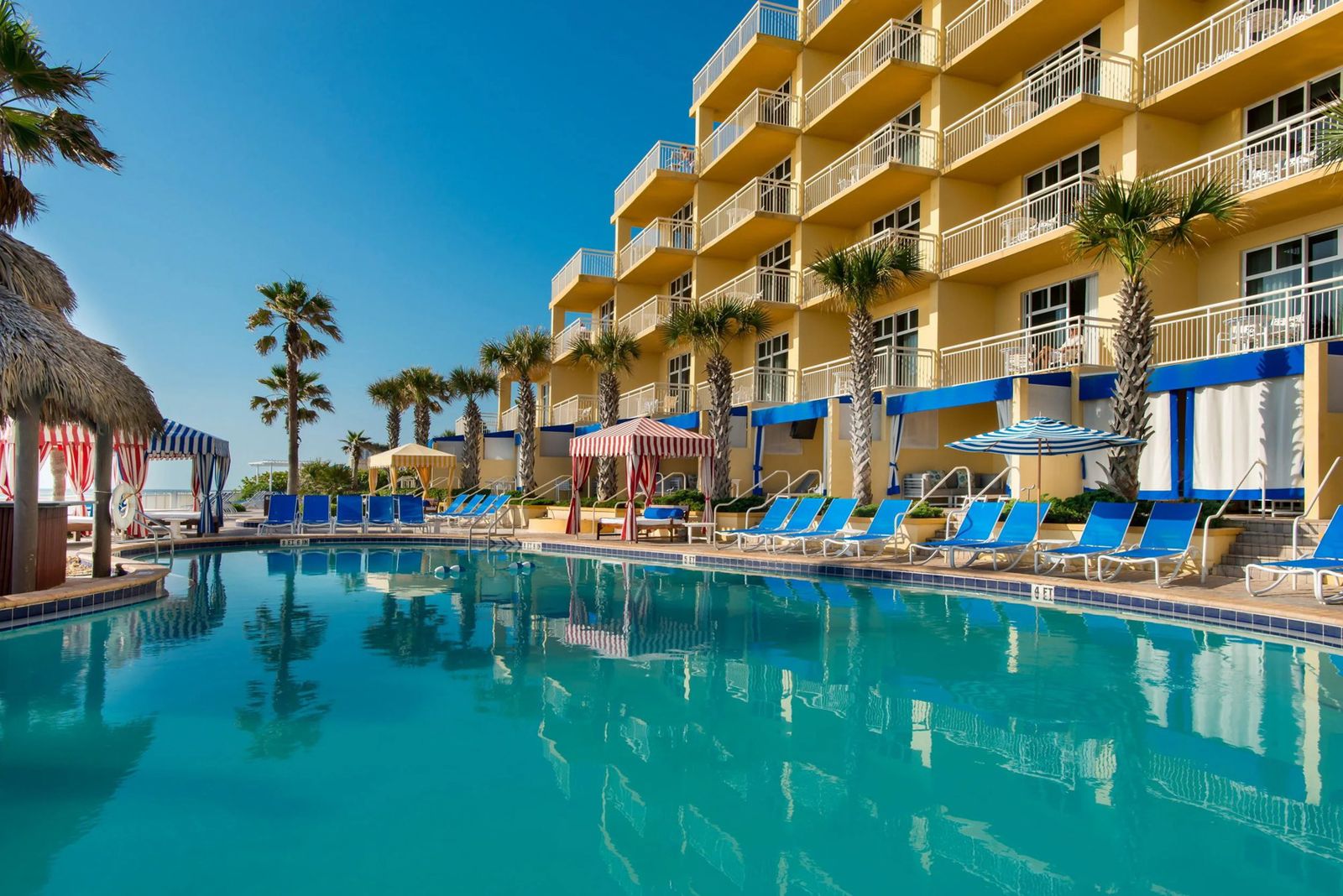
The photograph at the top of this post was made at the edge of an oceanfront resort pool, with the lens held just above the water. A yellow tower of balconies climbs the right side of the frame, palms line the deck, and a row of blue lounge chairs runs toward red and white striped cabanas in the distance. On the left, the thatched roof of a tiki bar frames the edge of the image, and the whole scene is mirrored in the still turquoise water below.
This is the frame a hotel sells its pool with. Aerial views show scale and location, and lobby images show service, but the pool deck shot is the one guests picture when they book. It has to communicate color, comfort, sun and the feeling of having a lounge chair waiting. Here is how we approach resort pool photography for hospitality marketing, and why the low, reflective angle does so much of the work.
Why the Water Level Angle Works
Most pool photos are taken from standing height, and most of them look like a parking lot with water in it. Dropping the camera to roughly a foot above the surface changes everything. The pool stops being a flat blue shape and becomes a foreground that leads the eye into the property. The building gains height and presence, and the water doubles every color on the deck.
In this frame the reflection carries the tower, the palms and the striped cabana straight down into the lower half of the image. That symmetry is what makes the photograph feel calm and expensive. It only works when the surface is glass still, which brings us to timing.
Plan the Shoot Around Wind, Sun and Guests
Resort pools are working spaces, so the best images come from planning rather than luck. Before we arrive we coordinate with the property on a few variables:
- Wind. Early morning is usually the calmest window on the coast, and a still surface is the difference between a mirror and a ripple.
- Sun direction. We want the sun lighting the face of the building and the deck, not glaring back off the water into the lens.
- Guest traffic. A short window before the pool opens lets us shoot empty frames, then add staged guests or staff if the brand wants lifestyle images.
- Pumps and fountains. Asking engineering to pause water features for a few minutes removes surface chop.
- Cleaning crews. A freshly swept deck and skimmed pool save hours of retouching.
On a beachfront property like this one, that usually means a shoot start right after sunrise, with the sky still clean blue and the deck in full light.
Style the Deck Like a Set
Every chair in this photograph is aligned. The lounges face the same direction, the towels are folded or removed, and the umbrella is open at a deliberate angle. That consistency reads as a well run property. Guests notice disorder long before they notice good design.
Our styling checklist for pool decks is short but strict:
- Square every lounge chair to the pool edge and space them evenly.
- Open umbrellas and cabana curtains to show color and shade, then tie them back cleanly.
- Remove trash cans, hose reels, signage stands and stray towels from the frame.
- Turn on any cabana lighting or bar lighting that adds warmth, even in daylight.
- Check the waterline tile and pool floor for debris, which the low angle exaggerates.
The striped cabanas here are a brand detail, and we place them so they echo across the frame from left to right. Those repeating colors tie the bar, the deck and the building into one story.
Composition: Lead the Eye From the Bar to the Tower
A strong resort pool image has a clear path through it. Here the curve of the pool edge pulls the eye from the tiki bar on the left, across the cabanas, and up the face of the tower on the right. The palms act as vertical rhythm, and the open sky on the left gives the frame room to breathe.
We keep verticals straight with a tilt shift lens or careful correction so the building stands upright, and we place the horizon low enough that the reflection has room to read. Framing the edge of the thatched roof in the corner also adds depth and tells the viewer there is a bar a few steps away.
Light, Color and Honest Editing
Pool water is easy to push too far. Oversaturated turquoise looks fake, and travelers have learned to distrust it. We bracket exposures so the bright sky, the shaded cabana interiors and the deep water all hold detail, then blend them with a natural hand. The goal is the color a guest would see standing there on a clear morning, not a postcard from a paint chip.
We also match white balance across every image in the set so the pool, the rooms and the restaurant feel like the same property when they sit side by side on a booking page.
Where These Images Earn Their Keep
A single well made pool deck photograph gets used more than almost any other asset a resort owns. It ends up on the homepage hero, the online travel agency listings, paid social campaigns, group sales decks and printed collateral. We deliver each hero frame in several crops so marketing teams can use the same image in a wide banner and a vertical story without losing the composition.
The pool deck is the promise. When the photograph shows still water, clean lines and a chair in the sun, the booking is half made before anyone reads the room rates.
If your resort, hotel or club is ready for pool and amenity photography that shows the property at its best, get in touch to plan a shoot. We will work with your team on timing, styling and deliverables so every frame is ready for the season ahead.