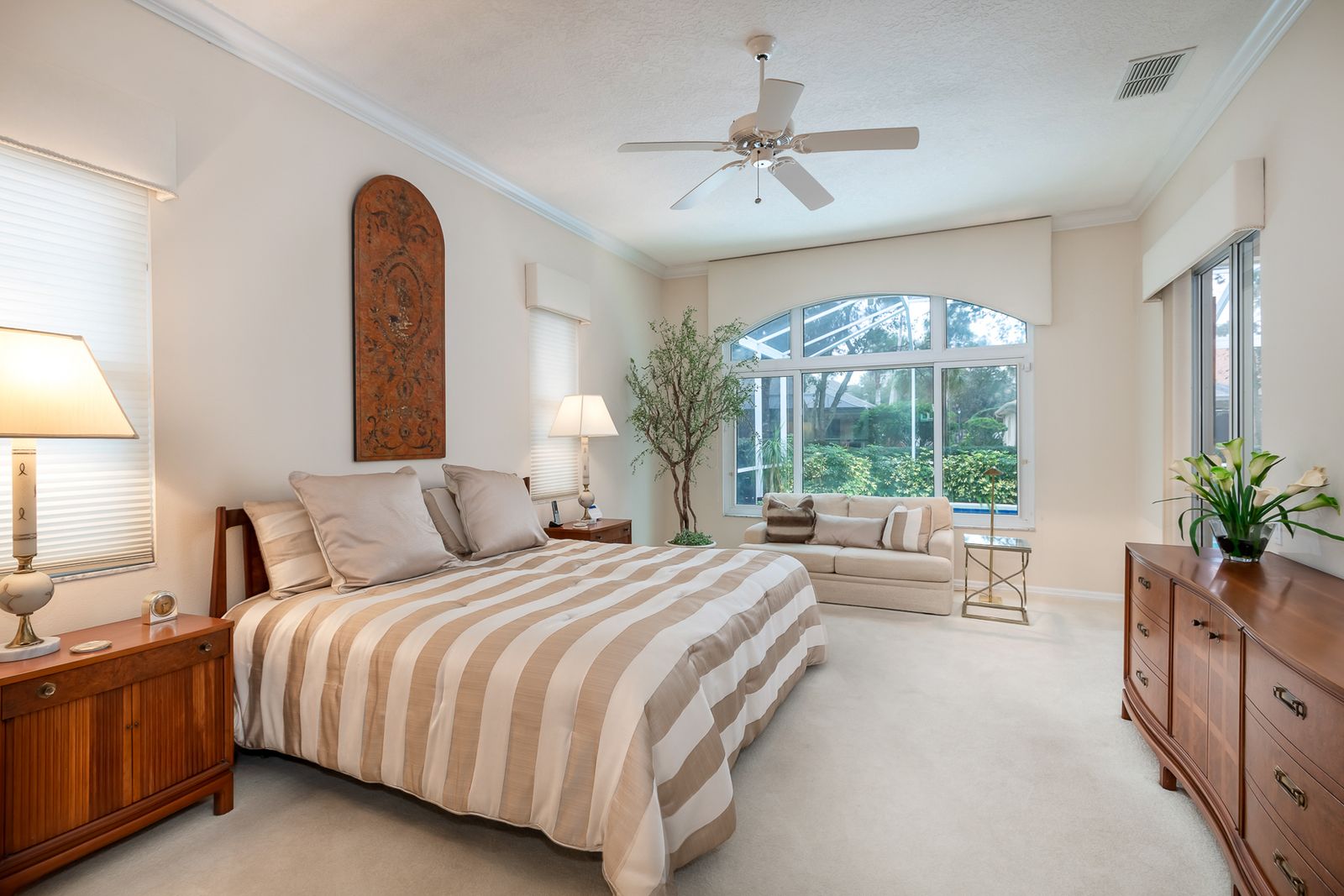
The primary bedroom is the room buyers imagine waking up in, and it is also the room most listings photograph worst. In this frame the bed sits at an angle to the lens, its striped comforter leading the eye toward an arched window where a loveseat rests beneath the glass. Through that window you can see the screened pool enclosure and the green of the yard beyond. Warm wood nightstands and a bowed dresser anchor both sides of the composition, and a ceiling fan sits centered above it all.
Nothing in this room is dramatic on its own. It is a calm, light filled suite with good bones and a view to the outdoor living space. That is exactly why it needs careful photography. A bedroom like this sells on feeling: space, rest, light, and connection to the rest of the property. Below is how we approach primary bedrooms for luxury real estate listings so the photograph communicates all of that in a single frame.
Choose the Corner That Shows the Room and the View
Most primary bedroom photos fail in the first five seconds, when the photographer plants the tripod in the doorway and shoots straight at the headboard. The result is a wall of bed with no sense of depth. We walk the room first and look for the corner that shows three things at once: the bed, the largest window, and the floor space between them.
In this image, shooting from a corner near the dresser puts the bed in the foreground on a diagonal, which creates depth and a natural path for the eye. The arched window becomes the destination of that path, and the screened lanai outside tells a Florida buyer instantly that the suite connects to the pool. One frame now answers several questions a buyer would otherwise scroll through five photos to answer.
- Angle the bed so it reads as a diagonal, not a flat rectangle across the frame.
- Keep the best window in view, ideally on the far wall where it pulls the eye deep into the room.
- Show visible floor between the bed and the far wall so the room reads as spacious.
- Hold the camera around chest height; too high exaggerates the ceiling, too low hides the floor plan.
Balance Interior Light with the Window
A bright window inside a softer interior is the classic bedroom exposure problem. Expose for the room and the window blows out to white, erasing the pool enclosure and the landscaping that add so much value. Expose for the window and the bed falls into murky shadow. Neither version sells the suite.
We solve this by capturing a bracketed series and blending exposures, often with a single bounced flash to clean up color on the walls and bedding. The goal is a room that looks the way your eyes see it when you stand in the doorway: bright, even, and natural, with real detail visible through the glass. Lamps stay on for warmth, but they should glow rather than dominate. In this frame the two bedside lamps add a soft amber accent that keeps the neutral palette from feeling clinical.
Make the Bed Like a Hotel, Then Style Lightly
The bed is the largest object in the photograph, and every wrinkle shows at listing resolution. Before the camera comes out, we work through a short styling pass with the agent or homeowner.
- Pull the comforter tight and square, with even overhang on the visible side.
- Stand pillows upright in layers: sleeping pillows in back, shams in front, one or two accent pillows at most.
- Clear nightstands down to a lamp, one small object, and nothing with a cord showing.
- Remove clothing, chargers, laundry baskets, and anything personal from every visible surface.
- Add one living element, such as the potted tree and the calla lilies on the dresser here, to bring color and life into a neutral room.
Restraint matters. A primary bedroom should feel calm and uncluttered, because that is the feeling buyers are shopping for. If a styling decision does not support rest and space, it comes out of the frame.
Keep Verticals Straight and Ceilings Honest
Bedrooms are full of vertical lines: window frames, door jambs, wall corners, and lamp bases. If the camera tips even slightly, every one of those lines leans and the room looks distorted. We level the camera carefully and correct any remaining perspective in post so walls stand straight.
Lens choice is equally important. An ultra wide lens can make a modest bedroom look like a ballroom, and buyers notice the disappointment the moment they walk in. We favor a focal length that shows the full room without stretching the furniture at the edges. The crown molding, the window valances, and the ceiling fan should all keep their real proportions. Honest photography builds trust, and trust keeps showings productive.
Tell the Story of the Whole Suite
The hero bedroom frame does the heavy lifting, but a primary suite usually deserves a short sequence. A buyer wants to understand how the bedroom flows to the bath, the closet, and the outdoor space.
- A reverse angle showing the entry, closet doors, or the path to the primary bath.
- A detail frame of the sitting area or window seat, where the light is best.
- A view from the bedroom out to the lanai or pool when a direct connection exists.
- A coordinated sequence so the primary bath images match the bedroom in color and tone.
When these frames are shot with consistent white balance and exposure, the suite reads as one cohesive retreat rather than a collection of unrelated rooms. That cohesion is a large part of what separates a luxury listing from an ordinary one.
Buyers do not choose a home because of a bedroom photo, but they will absolutely skip a home because the bedroom photo looks small, dark, or cluttered.
Ready to Photograph Your Next Listing?
Unrue Photo photographs luxury homes, primary suites, and outdoor living spaces for agents, builders, and designers who want every room to look its best. If you have a listing coming up, get in touch to schedule a shoot and we will plan the angles, light, and styling that help your property stand out.